randomeer: Mikah


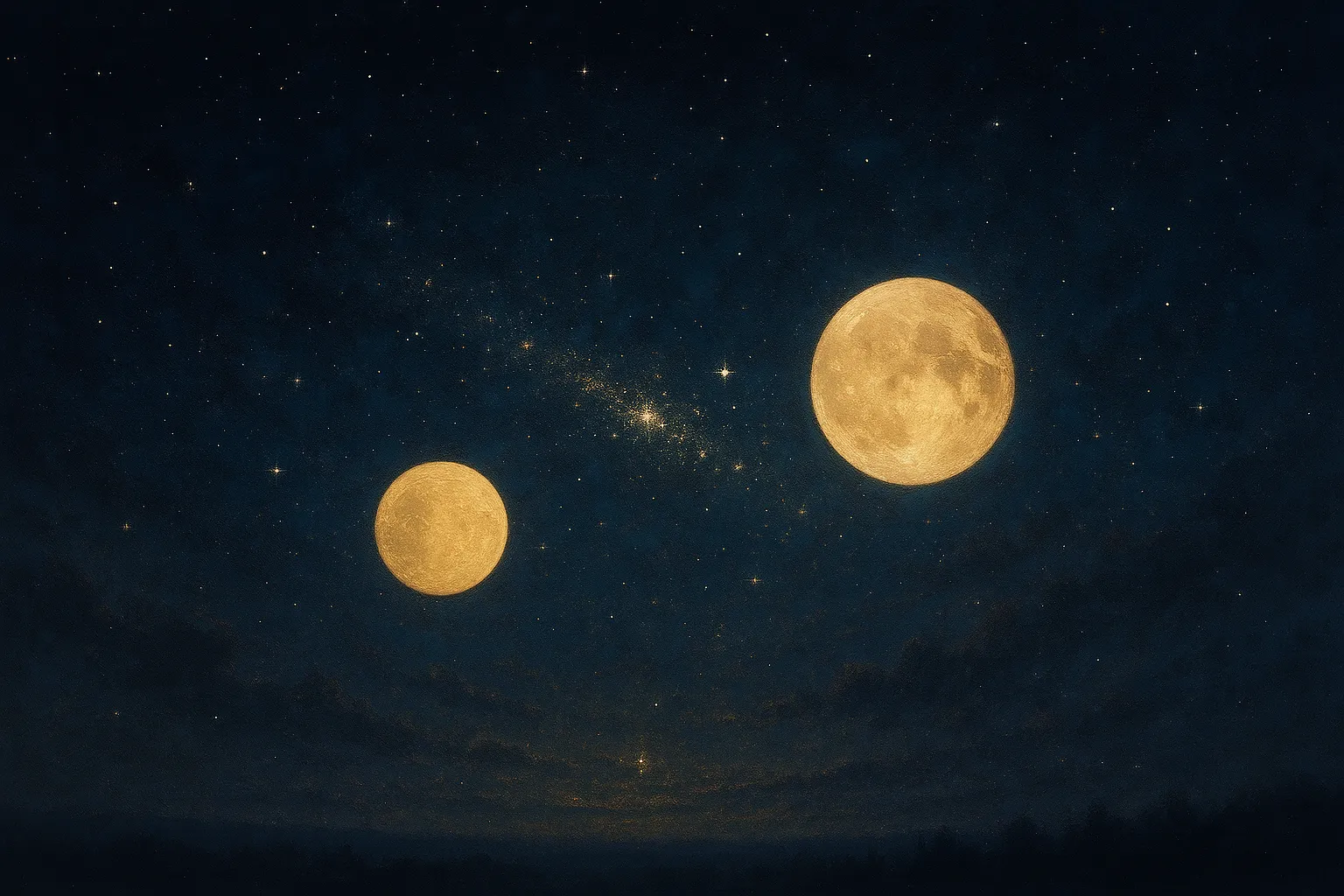
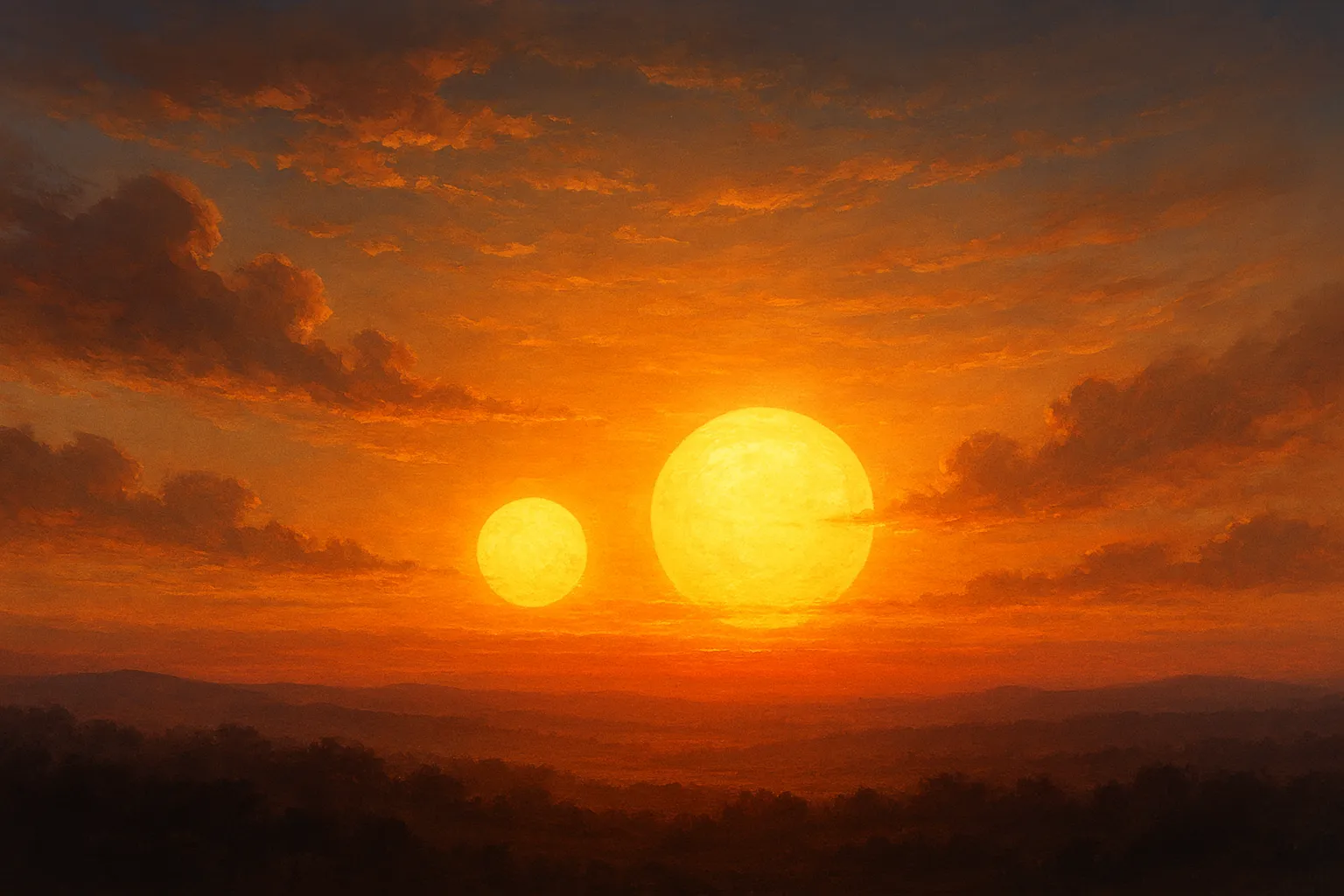
For months we watched it crawl across the sky, a bright wound in the darkness. The news called it a rogue star. The internet called it the end. People stood in their gardens at night, necks craned, waiting for the moment it would swallow us whole. It moved slowly — insultingly slowly — like it was taking its time deciding whether to kill us. Every week it grew a little brighter. Every week the predictions got worse. Tidal chaos. Atmospheric ignition. A gravitational shredding of everything we ever built. We stocked up on tins. We argued about bunkers. We refreshed the live feeds like addicts. And then, one morning, it didn’t destroy us. It just… rose. A second sun, pale and blue, lifting itself over the horizon like it had always belonged there. The apocalypse never came. Instead, we got two dawns.
At first, we thought the worst part would be the heat. But it wasn’t. It was the light. Nobody prepared us for the weeks without night. When the rogue star settled into its strange, looping orbit, it didn’t behave politely. It didn’t rise opposite our sun like a neat binary system. Sometimes it drifted behind the horizon for days. Sometimes it followed our sun like a second, paler shadow. And sometimes — the worst times — it refused to set at all. For seven days straight, the sky stayed bright. Not full daylight, but a washed-out, sleepless glow, like the world had been left on standby. Plants didn’t know when to close. Birds flew until they dropped. Foxes wandered in circles, confused by the endless half-light. People didn’t fare much better. Kids fell asleep in classrooms at odd angles. Office workers shuffled through their days like ghosts. The council tried to enforce “designated sleep hours,” but nobody’s body clock listened. Doctors started calling it sun-lag — a kind of cosmic jet lag that made your thoughts feel like they were wading through syrup. Some nights — when we actually had nights — you could hear people cheering in the streets as the darkness finally returned, like a lost friend stumbling home.
But in the end, we didn’t collapse into chaos like the documentaries predicted. We didn’t form sun cults or riot in the streets or abandon our jobs to worship the sky. We just… carried on. Humans are stubborn like that. We still made packed lunches. We still argued about bins. We still queued for coffee even when the sky refused to dim and our bodies begged for sleep. The weeks without night were miserable, of course. People taped blackout curtains to their windows with the same grim determination they once used for pandemic masks. But we adapted. We always do. And slowly, the fear faded. The rogue star stopped being an omen and became something else — a nuisance, a curiosity, a second clock in the sky.
Some mornings, when both suns rose out of sync, the world looked washed-out and tired, like it hadn’t slept either. Other days, the light layered itself in strange colours, turning the pavements lavender and the clouds the colour of old bruises. But every now and then — not often, maybe once a month if the weather behaved — the sky would clear so completely it felt polished. And when the suns drifted close in their slow, impossible dance, you could see something between them. Tiny flickers. Little threads of light. Sparks. Scientists said it was magnetic interaction. Religious groups said it was communication. Most people didn’t say anything at all — they just stood there, staring upward, feeling very small and very lucky. Because for a moment, it looked like the suns were talking to each other. Calling across the void in some ancient language of heat and gravity. And whether they were or not… well, that’s the part we’ll never know. But it’s nice to think they might be.