randomeer: SpaceMonkey



Every few billion births — not often enough to study, not often enough to even notice — someone arrives with a tiny biological typo. A microscopic shift in the cones of the eye. Nothing dramatic. Nothing cinematic. Just enough to let them see a sliver of ultraviolet.
They grow up thinking everyone sees the same world they do.
Why wouldn’t they? Kids don’t question reality; they assume it’s a shared document.
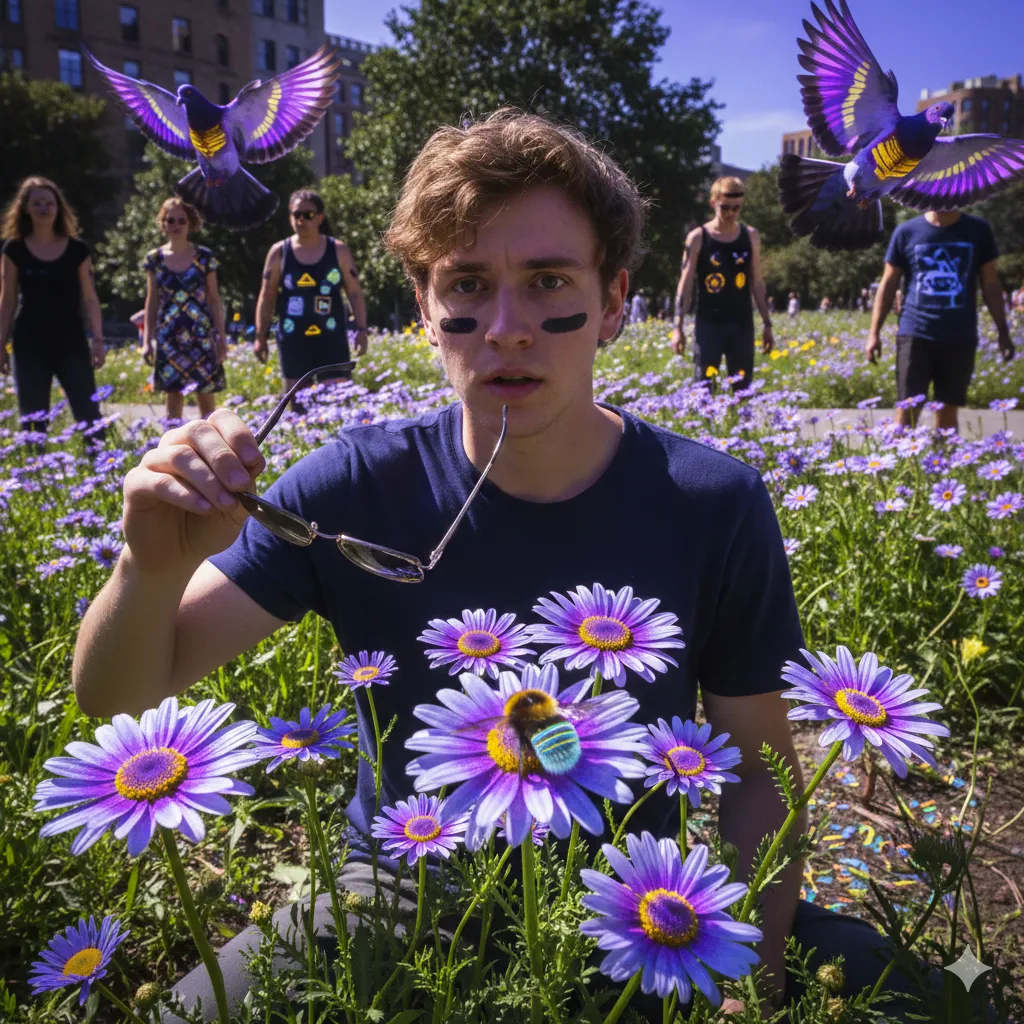
So when they point at the glowing rings on a daisy and say, “Look, it’s shining,” adults smile and say, “Yes, flowers are pretty.”
When they ask why pigeons have purple stripes on their wings, people laugh and say, “They don’t.”
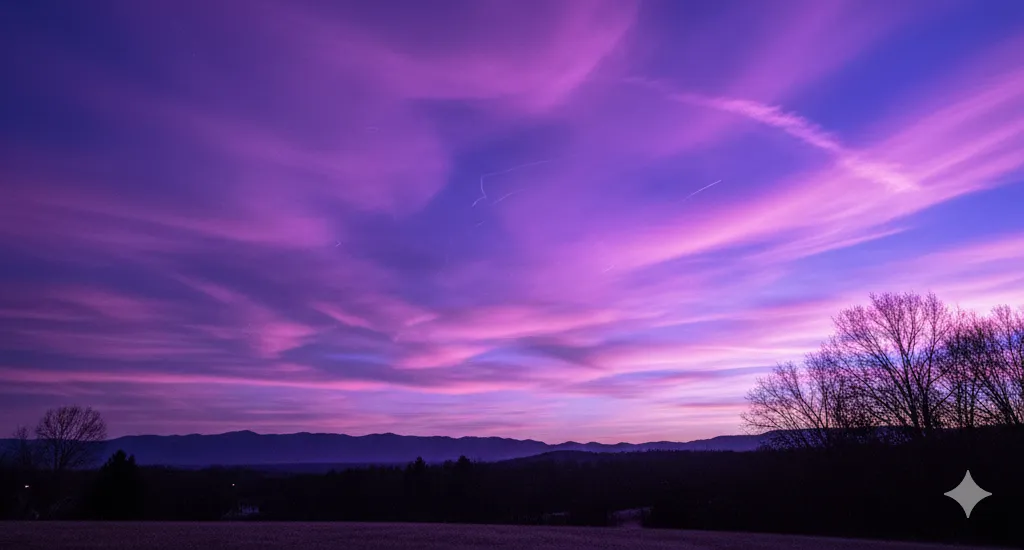
When they draw the sky with streaks and patches and strange moods, teachers call it imagination.
Eventually they learn to stop mentioning it.
Not because they’re embarrassed — because nobody believes them.
And then one day, usually in their teens, they realise the truth:
they’ve been seeing a hidden layer of the world their entire life.
It’s a bit like that scene in They Live, where the guy puts on the glasses and the billboards start screaming OBEY and CONSUME. Except in this version, there are no secret commands. No conspiracy. No aliens.
Just honesty.
Flowers stop being polite splashes of colour and start looking like neon landing pads for insects. Birds reveal ultraviolet badges and markings that make their social lives suddenly make sense. Sunscreen turns pitch-black, smeared across faces like war paint. Clothes betray dyes that were never meant to be seen. Human skin shows freckles and patterns hiding beneath the visible spectrum like shy ghosts.
The world hasn’t changed.
It’s just stopped pretending.
Every few billion births, someone gets the director’s cut of reality.